
Academic and Industry Partnerships: The Competitive Advantage of Measuring Impact
August 22, 2025
A major theme from the recent ISRII’s 13th Scientific Meeting was the future of youth digital mental health. Our new blog, featuring leaders from SecondMuse, the University of Virginia, Hopelab and Astrolescence takes a deeper dive into this topic, outlining three key takeaways for building a more effective ecosystem.
At the International Society for Research on Internet Interventions (ISRII) 13th Scientific Meeting, researchers, practitioners, and innovators from around the world gathered to explore how technology can transform health and well-being. One of the central themes was the role of digital tools in addressing youth mental health.
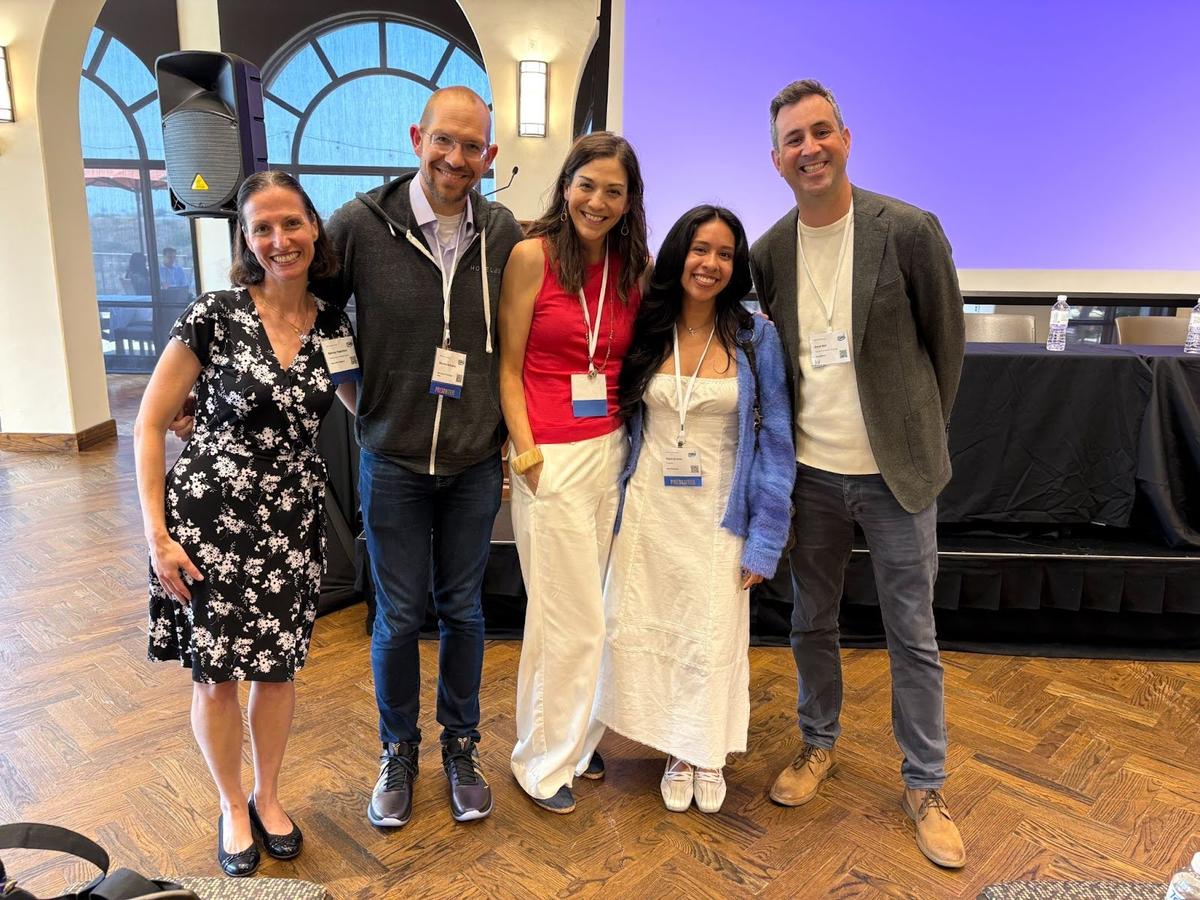
The keynote panel, Supporting Youth Through Digital Interventions, brought together voices from academia, startups, investors, and youth advocates to ask a simple yet vital question: What does it take to ensure digital mental health solutions truly work for young people? The conversation grappled with systemic tensions between academia and industry, opportunities for collaboration, and most importantly, the role of young people themselves as co-creators in this ecosystem.
This article builds on that discussion, highlighting the panelists’ perspectives on exploring the complexities of the youth digital mental health sector and the competitive advantage of measuring the impact of digital health interventions.
Academia: Rigor Meets Real-World Needs
Bethany Teachman, Professor of Psychology at the University of Virginia, shared a candid acknowledgement: “Large differences in timelines, deliverables, and incentives make meaningful academic–industry collaborations challenging, despite the potential impact.”
Academics are trained and rewarded to produce rigorous knowledge such as randomized trials, peer-reviewed publications, and longitudinal findings. Yet as Dr. Teachman noted, there is growing recognition that such work must extend beyond narrow circles. Impactful research ideally goes beyond a publication and should inform interventions that outlive the span of a grant cycle and meaningfully improve young people’s lives.
A natural friction exists between academia and industry. Researchers are focused on advancing discovery and knowledge, while industry is driven by profitability. Both groups want to find interventions that work. For the youth digital mental health sector to mature, it must bridge these silos.
At the University of Virginia, Teachman co-leads the Thriving Youth in a Digital Environment (TYDE) initiative, which provides seed grants to encourage faculty and student research–industry collaborations, internships for students in startups, and training on navigating joint intellectual property.
Startups: Speed, Adaptation, and Cultural Relevance
Startups often move at a different pace. Kayla Suarez, Co-Founder of Astrolescence and formerly the host of Teenager Therapy, brought an industry perspective. “For a startup, research partnerships are both a credibility builder and a force multiplier. It’s not about perfect data right away, it’s about knowing from the start how you’ll prove your work matters, and weaving impact measurement in from day one.”
Suarez emphasized that startups can pilot ideas in weeks, quickly adapt based on user feedback, and scale what works. This agility is critical when serving Gen Z, a generation shaping digital culture in real time. Yet speed alone is not enough. “Academic partners bring the depth and rigor to match the speed and cultural relevance startups naturally have,” she explained. “When those approaches combine, the evidence becomes both credible and timely enough to matter.”
Panelist David Ball, Head of Well-being at SecondMuse leads the Headstream Accelerator, a program that has invested in and supported nearly 100 youth-focused mental health companies, including Suarez’s Astrolescene. “Many of these founders face a what comes first, the chicken or the egg dilemma when it comes to measuring the impact of their product. They are asked for impact data before they have resources to collect it.” To help, Ball and the team at Headstream co-created the Impact Navigator, a tool for startups to improve the testing plans and frameworks for evaluating the impact that their products have on their target beneficiaries.
Investors: Moving Beyond “Soft Measurement”
Powerholders, such as investors and policymakers, can also play a critical role in influencing the prioritization of impact and evidence.
Panelist Jana Haritatos, Chief Science Officer at Hopelab, a researcher, investor, and convenor dedicated to fostering greater mental health outcomes for Brown, Black, and Queer young people, stressed that impact investing in youth mental health must evolve. A recent impact piece in Impact Alpha highlighted Hopelab’s pioneering investment strategy.
For years, impact investing has wrestled with a reputation problem — seen as concessionary capital, softer and slower. Part of that narrative persists because we’ve accepted soft measurement.
Too often, impact reports count outputs (e.g., how many youth were served) without linking those numbers to the deeper outcomes that investors and decision-makers need to see: Did symptoms improve? Did access expand? Did the company survive, scale and become self-sustaining?
Hopelab Ventures’ impact measurement approach goes beyond the number of young people served. Companies in the portfolio aren’t just asked about who they reached — they’re reporting on whether their solutions worked, whether they’re still around and growing, and whether they’re contributing to broader systemic change in youth mental health delivery systems.
Hopelab has invested over $12 million into 20 companies with the strong belief that when combined, robust measurement and capital will create social and financial returns. Haritatos shared, “Our hope in sharing these kinds of impact hypotheses and rigorous measurement approaches is that it both helps make the case broadly to other investors that this isn’t charity, it’s about results, and it creates an exciting opportunity and call for increased collaboration across the innovation and research ecosystem.”
The challenge, but also the opportunity to help bridge the existing gap between academic research and industry, is to “right-size” efficacy research and develop research plans that fit within the strategic vision of youth-serving mental health start-ups at each phase of their journey.
Societal Trust in Digital Mental Health Interventions
This is a vital point at a time when the digital mental health sector faces heightened scrutiny. The Headstream team evaluates hundreds of companies every year for their Residency and Accelerator programs. “The COVID-19 pandemic sparked a surge in digital health utilization, but with that came questions of efficacy, equity, and long-term viability,” said Ball. “There are thousands of different mental health technologies, the majority of which lack rigorous evaluation.” As societal trust in technology erodes, largely due to the increasing prevalence of AI and social media, digital health solutions will be held to an increasingly higher standard.
Shared learning infrastructures, such as the Implementation Playbook developed by the Society for Digital Mental Health, to which Teachman contributed, are one promising step. The playbook provides best practices for the effective implementation of digital mental health interventions based on the expertise of dozens of American health care providers and researchers. Resources such as the Playbook for the healthcare industry and the K-12 Mental Health Tech Navigator, for the education sector, help build trust in digital interventions and understanding in how to choose and use the appropriate products.
Perhaps the most strategic way to combat public perception and to build products that parents, healthcare and education leaders and youth themselves will use is to work directly with young people. This theme was woven throughout the panel. Young people must not be treated as passive consumers, but as collaborators.
“Gen Z is shaping trends, language, and behaviors in real time,” Suarez explained. “If we co-create with them — and share what’s working and what’s not across academic, industry, and community lines — we get findings that are richer, more relevant, and more actionable.”
Toward Shared Learning and Mobilization
There are millions of young people around the world who would benefit from access to mental health care. What does it take to build digital mental health solutions that truly serve youth?
- Academics bring rigor and evaluation frameworks.
- Startups bring speed, adaptability, and cultural fluency.
- Investors bring accountability and resources to prioritize outcomes.
- Youth bring the lived expertise that makes solutions relevant and trusted.
The path forward requires partnerships across these groups, mobilizing around initiatives that already model collaboration and engaging individuals with first-hand experience across these sectors who can help create a shared vision and path for what’s possible here.
At a moment when youth mental health is under scrutiny, the sector has an opportunity to lead differently: by building shared learning infrastructures, treating young people as partners, and prioritizing evidence as much as innovation.
About the Panelists
- Bethany Teachman, PhD is a Commonwealth Professor of Psychology and Director of Clinical Training at the University of Virginia, where she co-directs Thriving Youth in a Digital Environment and leads projects such as MindTrails and Project Implicit Health.
- Jana Haritatos, PhD is Chief Science Officer at Hopelab, where she guides strategy at the intersection of science and technology to improve youth well-being.
- David Ball is Head of Well-being at SecondMuse, where he has led initiatives such as the Headstream Accelerator and Youth Collective to support youth mental health.
- Kayla Suarez is co-founder of Astrolescence and former host of the widely recognized Teenager Therapy podcast; her latest project, GrownKid, helps teens transition into adulthood.
Special thanks to Stephen Schueller, PhD (Moderator) and Adrian Aguilera, PhD, who co-chaired the Program Committee for ISRII’s gathering and contributed to this article.
_______
This article is based on the panel “Supporting Youth Through Digital Interventions” at the 13th ISRII Scientific Meeting.